

Volcanoes of Indonesia: Batur, Agung, Ijen, Bromo and Rinjani. Which one to choose and how to climb from Bali
Seeing the sunrise from the summit of an active volcano is one of the most popular activities in Bali. For a first climb, people usually choose Batur: the ascent takes about two hours, requires no mountain hiking experience, and from the top there is a view of the lake and the neighbouring mountains.
For those ready for a serious workout, Agung is a good fit. To see the acid lake of Ijen, the Bromo caldera or to do a multi-day trek on Rinjani, you will have to travel to the neighbouring islands – to Java or Lombok. At the same time, not all volcano excursions involve many hours of hiking uphill.

Let's look at which volcano is best for a beginner to climb, how much time to set aside for a trip from Bali and how to choose a suitable route among the MyBaliTrips tours.
Which volcano in Indonesia to choose: a comparison of routes
Volcano | Height | Difficulty | Trip including travel | Ascent / walking part | Start time | Price from |
Batur, Bali | 1717 m | Easy to moderate | ≈ 8–12 hours | 2 hours | 04:00 | |
Abang, Bali | 2151 m | Easy to moderate | ≈ 12 hours | 2.5 hours | 03:00 | |
Agung, Bali | 3142 m | High | ≈ 12–16 hours | 4.5–5.5 hours | 00:00 | |
Ijen, Java | 2799 m | Low | ≈ 24 hours or 2 days with an overnight stay | 1.5–2 hours | 02:00 | |
Bromo, Java | 2329 m | Easy walking part | 3–4 days as part of a tour from Bali | A short walk ≈ 240 steps to the crater | 03:00, jeep | |
Rinjani, Lombok | 3726 m | Very high | 3–5 days including travel from Bali | 2–3 days of trekking, 6–10 hours of walking per day | 08:00, departure for the summit around 02:00 |
* Prices are per person and depend on the chosen programme and its conditions. The start time of the climb does not include the transfer from the hotel. For Bromo, the price of the combined tour with Ijen is given.
Batur: the first volcano in Bali
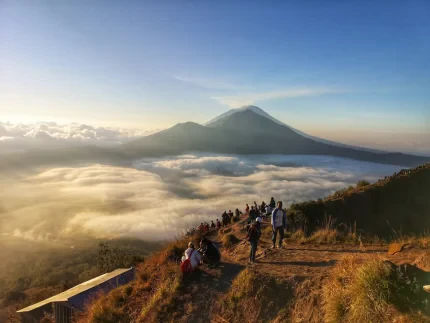
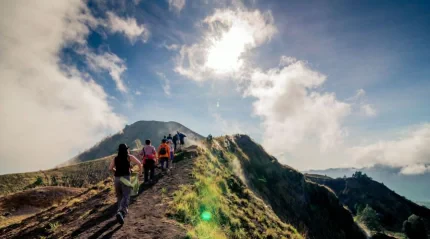
Batur is located in the mountainous Kintamani area, at an altitude of 1717 metres above sea level. From the summit you can see Lake Batur, the ancient caldera, Mount Abang and Agung towering in the distance. The classic ascent starts at around four in the morning. The first sections follow a gentle trail, then the path becomes steeper, with rocks and loose volcanic sand appearing. After about two hours participants reach the summit, where they greet the sunrise with hot tea or coffee and a light breakfast.

No special mountain hiking experience is required, but you shouldn't count on an easy stroll either. The ascent takes place in the dark, and on the way down you have to watch your step carefully. If you are used to walking a lot, the climb usually doesn't cause much difficulty.
There are several ways to get to know Batur: from a short trek to a two-day journey around Kintamani.
Climbing Batur – the classic ascent with a local guide takes one morning. You can join a group or choose a private programme, including one with a visit to the hot springs after the descent.
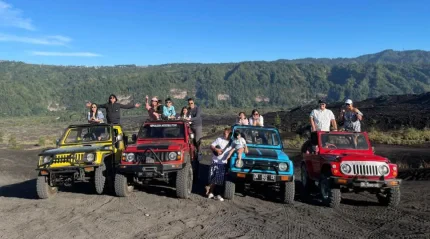
Jeep tour to Batur – for those who don't plan to hike up, there is a ride across lava fields and black volcanic sand. There are sunrise and sunset routes lasting 3.5 or 5 hours to choose from. Important: a regular jeep tour does not include an ascent to the summit.

Jeep expedition – a private journey around the Batur caldera includes a drive along volcanic roads and relaxation in thermal springs. There is also an option with a hike up.
Two days in Kintamani – a tour with an overnight stay near Batur. The first day is dedicated to the lake area: you will visit the village of the dead Trunyan and the Alas Harum Bali park, and in the evening you will check into a hotel. The next morning you will climb Batur and relax in the hot springs after the descent. Staying overnight near the starting point lets you rest before the trek instead of a long night drive from the coast.
Abang: an alternative to Batur
Next to Batur is Mount Abang, 2151 metres high. It was once part of an ancient volcanic massif, and today it is known for its forest route with views of the lake and the caldera. On Abang, most of the route goes through forest rather than along open volcanic slopes as on Batur. Along the way there are Balinese shrines, and there are noticeably fewer tourists. The ascent starts early in the morning. The whole trek takes about four to five hours and suits travellers with average physical fitness. Learn more about the programme.
Agung: the highest peak in Bali
Agung reaches 3142 metres and is considered a sacred mountain by the Balinese. At its foot lies the Besakih temple complex, and the volcano itself is clearly visible from the island's east coast.
The ascent of Agung takes much longer and requires good endurance. It is not suitable for beginners. Departure is around midnight in order to reach the summit before sunrise. The way up takes on average 4.5–5.5 hours one way. A particularly difficult section begins closer to the summit: a steep rocky slope where you sometimes have to use your hands and scramble. The descent takes several more hours, so it is important to assess your endurance and the condition of your knees in advance.

We recommend the climb of Agung for those who already have experience of long mountain ascents. There are several options: medium and long routes, as well as a two-day programme with an overnight stay. For a first experience it is better to choose Batur – the route is shorter, there is less elevation gain and the descent is easier. Agung requires far more effort, but it lets you reach the highest point of Bali and look into a volcanic crater.
Ijen: a turquoise lake and sulphur deposits
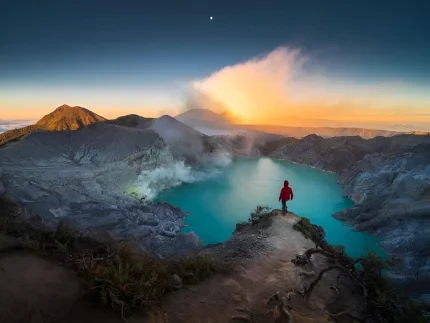
Ijen is located in eastern Java, not far from Banyuwangi. The volcano's main attraction is an acid lake of an unusual turquoise colour, surrounded by sulphur slopes. Local miners still work here, extracting sulphur by hand and carrying heavy baskets along mountain trails.
The volcanic massif reaches 2799 metres. The tourist ascent begins at around two in the morning and takes an hour and a half to two hours to the viewing areas. The trail is wide, with no difficult technical sections, so the climb is accessible even to beginners. However, the path goes uphill almost constantly, and after an overnight drive from Bali the ascent can feel harder.

Ijen is known for a rare natural phenomenon – the blue glow that occurs when sulphuric gases burn. It can only be seen in the dark. However, at the moment the descent to the acid lake is closed due to a high concentration of gases and seismic activity. A visit to the blue flame viewing spots is not part of the guaranteed programme. The restrictions are related to safety and may change depending on the situation on the volcano. During the tour, participants walk along permitted and safe sections near the crater, watch the miners at work and greet the sunrise with a view of the lake.
You can get to Ijen via the port of Gilimanuk in western Bali. After the ferry crossing to Banyuwangi, the road continues to the foot of the volcano. The shortest option is a one-day tour to Ijen. In the evening you leave Bali, cross by ferry to Java, and at night you start the ascent. You return the following day. This schedule means you don't need a hotel overnight stay, but you will get hardly any proper sleep during the trip. The group programme includes a transfer from a set meeting point, ferry tickets, a guide, a torch and a respirator. Pick-up directly from your hotel is available for an extra fee, and meals are also paid separately.
For a more relaxed schedule there is the two-day tour "Leisurely Ijen and the Jawatan Benculuk forest". On the first day you will visit a forest with huge tamarind trees and stay overnight in a hotel. After the ascent of Ijen, the Jagir waterfall is planned. Choose the one-day format if you are short of time and a night drive doesn't scare you. With an overnight stay you will have the chance to get a good sleep before the climb and see more of Java than just the Ijen volcano.
Bromo: sunrise over the caldera and the Sea of Sand
Bromo is an active volcano 2329 metres high in the Bromo-Tengger-Semeru National Park in East Java. It is located in the middle of a vast plain of volcanic sand surrounded by mountains. It is called the Sea of Sand. The main feature of a visit is a sunrise trip in a four-wheel-drive jeep. At around three in the morning tourists set off for the viewpoint on the edge of the caldera. From there you can see smoking Bromo, neighbouring Batok and Semeru on the horizon.
After sunrise the jeep descends to the Sea of Sand. From here the short walking part begins: you need to cross the sandy plain and, if access is open, climb the 240 steps to the crater rim.
The walking part on Bromo is short, but because of the early departure and the long drive the trip takes quite a lot of time. That's why it's more convenient to travel from Bali for several days at once, combining the volcano with other places in East Java.

We offer three routes with different content.
Bromo and Ijen in 3 days – a tour departing from Bali. On the first day you will cross the Bali Strait and reach Bromo. The next morning you will greet the sunrise over the volcanoes, drive across the Sea of Sand and visit the Madakaripura waterfall. Then you will head to Ijen to climb to its crater at sunrise, and return to Bali.
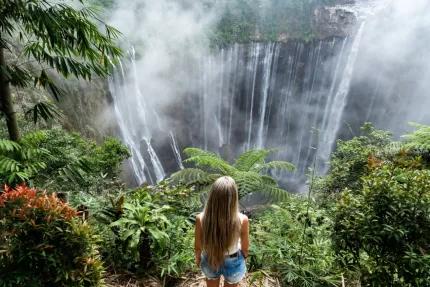
Bromo, Ijen and Tumpak Sewu – a four-day journey to the main natural attractions of East Java. In addition to the two volcanoes, you will visit the huge Tumpak Sewu waterfall, where dozens of streams fall from a high cliff into a jungle-surrounded gorge. You can descend to its foot along a steep, wet trail, but this requires good physical fitness.
Climbing Bromo, the Tumpak Sewu and Madakaripura waterfalls – a tour for those who want to see the Bromo volcano and two famous Java waterfalls at once. Unlike the previous programmes, there is no ascent of Ijen here. Instead, you will visit the Tumpak Sewu and Madakaripura waterfalls, the latter surrounded by high cliffs, and also greet the sunrise over the Bromo caldera. Another difference is that the tour starts at Surabaya airport, so the journey from Bali must be arranged separately.
Rinjani: trekking on Lombok
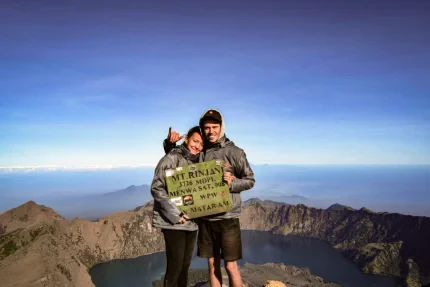
Rinjani is located on Lombok, the island neighbouring Bali. Its height is 3726 metres. This is a difficult mountain route with long stretches of walking and overnight stays in tents at high altitude, which is not suitable for people without climbing experience.
In the volcano's caldera lies Lake Segara Anak, next to which rises the young volcanic cone of Barujari. To see these places you will have to pass through savannah, mountain trails and stretches of loose volcanic sand.
The MyBaliTrips programmes on Rinjani offer two duration options.
In two days participants climb to the camp on the crater rim and sleep in tents. At around two in the morning the final push to the summit begins, in order to make it for sunrise. The three-day programme includes an additional descent to Lake Segara Anak and the hot springs.

On some sections of the route you will have to walk six to ten hours a day. The closer to the summit, the colder it gets and the harder it is to move over the loose ground. At an altitude of almost 3800 metres there is also a risk of altitude sickness, even if you are in good physical shape. Rinjani is worth considering only if you have already done long hikes and know how you handle serious exertion. For a first mountain route it is better to choose Batur or Ijen.
You can get to Lombok from Bali by plane or fast boat. From there a transfer to the starting point of the climb will be arranged. The programme includes a guide, meals during the hike, tents, sleeping gear and entrance tickets. Travel from Bali to Lombok and back is paid separately, as is local insurance.
For a climb of the Rinjani volcano you need to take the season into account. During heavy rains or when fire danger is elevated, the national park administration closes the routes. Before booking it is important to check not only the weather but also the availability of permits for the chosen dates.
What to take with you to a volcano?
Even a short climb of Batur starts in the middle of the night, when it is considerably cooler in the mountains than on the coast. On Agung, Ijen and Rinjani you may need a hat, gloves and an extra warm layer of clothing. The most important thing is comfortable closed shoes with non-slip soles. For long hikes it is better to choose trekking boots. A raincoat, water, a small snack and a spare T-shirt will also come in handy.
We provide some of the necessary equipment. For example, torches for night climbs, respirators on Ijen and tents on Rinjani. Trekking poles are included in the price of the Agung climb, and on Rinjani they can be rented for an extra fee. But the conditions of each tour differ, so before paying it is worth checking what is included in the option you have chosen.
The weather on the volcanoes is changeable. Even in the dry season there can be fog, wind and rain, and access to active craters may be restricted for safety reasons.
FAQ
Which volcano in Bali should a beginner climb?
For the first time it is better to choose Batur. The ascent takes about two hours. No special experience is required. If the hiking route seems too difficult, you can go to the volcano by jeep.
Do you need physical fitness for Batur?
Basic endurance will be needed. There are steep sections, rocks and loose volcanic sand along the route. For people who walk regularly, the climb of Batur won't cause any particular difficulty.
Which is harder — Batur or Agung?
Agung is significantly harder. The ascent takes about five hours one way, and closer to the summit you have to walk up a steep rocky slope. The Batur route is shorter and more suitable for beginners.
Can you see the blue flame on Ijen?
The glow is visible only in the dark, but the descent to the acid lake is quite often closed. So you cannot count on the blue flame as a guaranteed part of the excursion.
How many days do you need to see Bromo and Ijen from Bali?
Three days are enough for a route with two volcanoes and the Madakaripura waterfall. If you want to add Tumpak Sewu, choose the four-day tour.
Can you climb the volcanoes on your own?
The rules differ depending on the volcano and the national park. Organised climbs with MyBaliTrips include local guides. Before travelling on your own, you must check the requirements for registration, permits and accompaniment, and also check whether the route is open.





There is a sulfur lake Kava Ijen, famous for its extraordinary and diverse shades of water and absolutely fantastic views.

Discover the enchanting 7 Wonders of Java Island in Indonesia, where natural beauty and cultural treasures await

Lombok, Bali’s lesser-known neighbor, has preserved its pristine nature and laid-back pace of life.

Experience the beauty of Bali's volcanic landscapes while savoring delicious coffee at these scenic spots.

Stay and recharge in a comfortable accommodation surrounded by pure nature.

